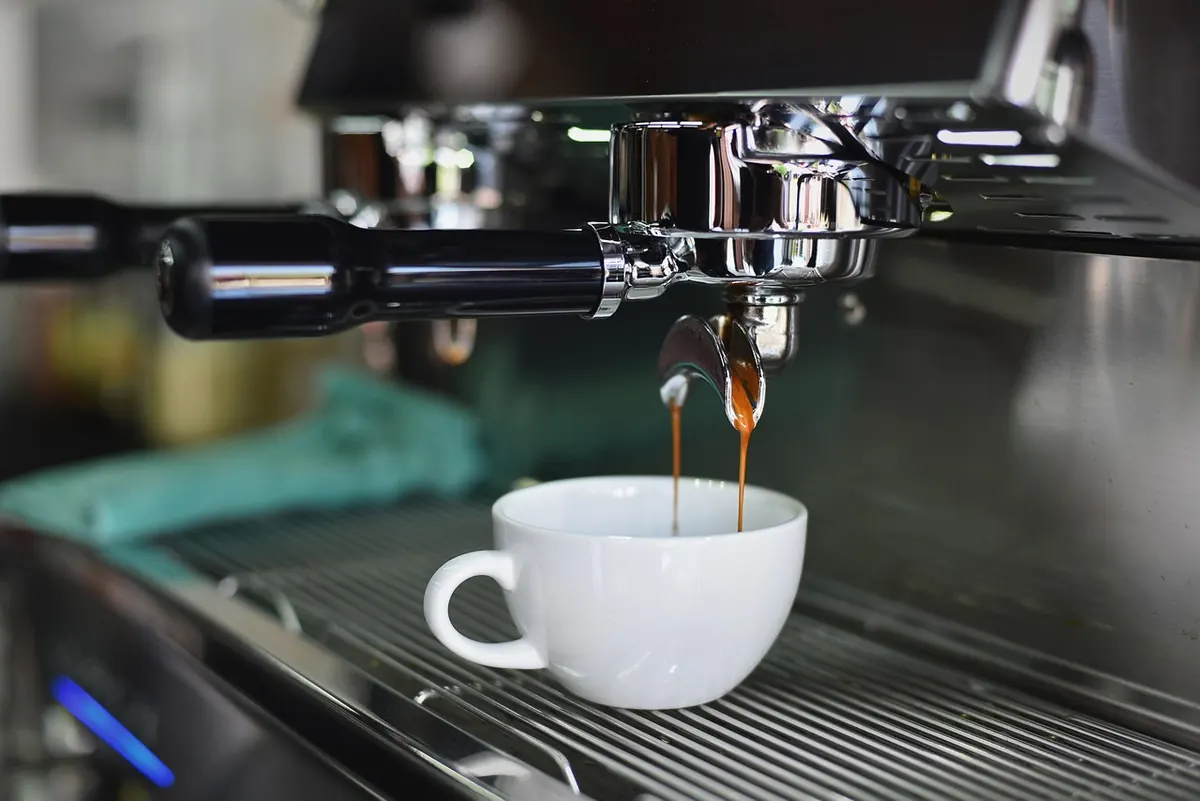
Pull a shot for a friend and they will ask how long it took. Pull one for a barista and they will ask what it weighed. Both questions matter, but only one of them tells you what actually happened inside the basket. A shot that runs for thirty seconds can taste thin and sharp or rich and sweet depending on how much coffee went in and how much liquid came out. That is why the ratio — dose to yield — is the first number worth learning, and often the last one a home setup gets around to measuring.
Here is the short version: weigh the coffee going in, weigh the espresso coming out, keep the clock in view as a symptom rather than a target, and change one thing at a time. Everything below is detail on top of that.
Dose, Yield, and Time in Plain Terms
Three measurements describe a shot, and each one answers a different question.
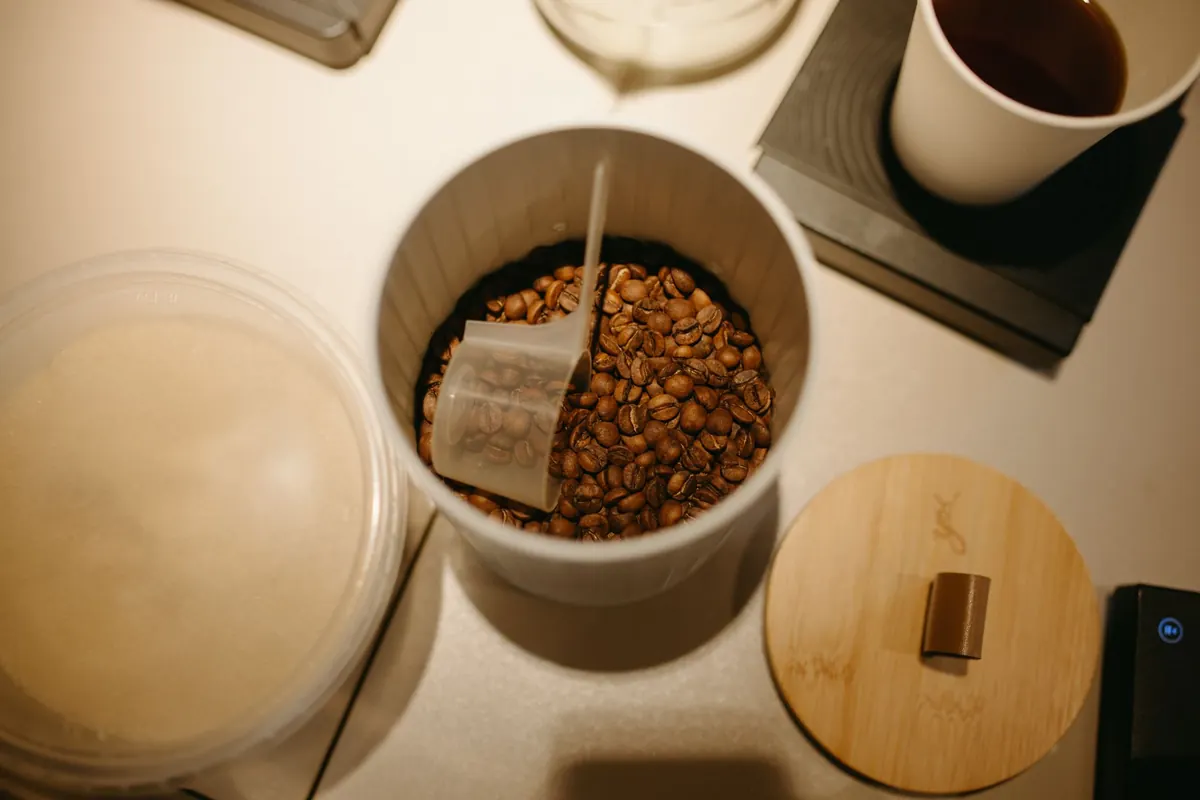
- Dose — the weight of dry ground coffee in the basket, in grams. This is your starting point and it should barely move once you have settled on a basket size. An 18 g basket wants roughly 18 g of coffee in it; overfill it and the puck hits the shower screen, underfill it and water channels through the gaps.
- Yield — the weight of liquid espresso in the cup, also in grams. Not millilitres, not the markings on a shot glass. Crema is mostly gas, so volume lies to you.
- Time — how long the shot runs, from the moment you start the pump to the moment you stop it. Pick a convention (pump on, or first drop) and stick to it, because a shot timed from first drop will always look a few seconds faster than the same shot timed from the pump.
The ratio ties the first two together: yield divided by dose. An 18 g dose producing 36 g of espresso is a 1:2 ratio, usually written simply as 1:2. It means one gram of coffee in for every two grams of espresso out. Nothing more complicated than that.
The Ratios Worth Knowing
Nearly every espresso you have enjoyed sits somewhere between 1:1 and 1:3. This is the cheat sheet, in the order most people should try them.
- 1:1 to 1:1.5 — ristretto. Thick, syrupy, low in acidity and high in concentration. A 18 g dose gives you 18–27 g out, a small and intense cup. Good for dark roasts, for cutting through milk in a piccolo, and for anyone who finds a classic shot watery.
- 1:2 — the classic. The default for good reason: balanced sweetness and body, enough liquid to taste the coffee properly. If you have no idea where to start with a new bag of beans, start here.
- 1:2.5 to 1:3 — lungo. More water through the same coffee, so lighter body and more clarity, more of the fruit and floral notes, and a longer finish. Useful with light roasts that taste hollow at 1:2, and as a base for americanos and iced drinks where you want flavour without overwhelming intensity.
- 1:4 and beyond. This stops being espresso in any useful sense and drifts toward a very concentrated filter brew. Fine to drink, but judge it by taste, not by the espresso rules.
A traditional Italian single — around 7 g in, roughly 25 ml out — lands near 1:2 as well, just at a smaller scale. The ratio travels; the numbers around it shrink.
Why Weight Beats Volume Every Time
A shot glass with 30 ml printed on the side is a recipe for inconsistency. Fresh coffee produces thick crema that collapses over the next minute, so the same shot can read 25 ml at ten seconds and 40 ml at ninety. Brew temperature, bean age and even the weather change how much foam you get.
A small scale reading to 0.1 g removes all of that guesswork. Put a cup on the scale, tare it, start the shot, and stop when the number hits your target. You will immediately discover two things: your shots were probably larger than you thought, and your grinder retains a fraction of a gram between doses, which is worth accounting for if you single-dose and expect exact numbers.
Change one variable at a time. Two adjustments made together teach you nothing about which one worked.
Time Is a Symptom, Not a Target
You will hear that a shot should run for 25 to 30 seconds. Treat that as a description of a well-set-up shot rather than a rule to force. Time tells you how fast water moved through the puck, which is a grind question far more than a ratio question.
Grind is your main dial. Dose sets how much coffee you are working with. Ratio decides how concentrated the result tastes. Time is what happens after those three decisions are made: grind finer and the shot slows down, grind coarser and it races.
So when a shot tastes wrong, resist the urge to chase seconds. Fix the taste, then notice what the clock says. A shot that tastes balanced at 22 seconds is a good shot. A shot that tastes bitter at 34 seconds is not improved by making it run to 28.
A Dialing-In Checklist
- Choose your dose by basket. Match the coffee to what the basket is rated for — typically 9–11 g for a single, 16–20 g for a double. Write the number down and leave it alone.
- Start at 1:2. Double the dose for your yield. 18 g in, 36 g out.
- Set the grind so the shot lands somewhere near 25–30 seconds. Not to hit a number, but to get into a range where extraction is sensible.
- Taste it, and taste it as it cools. Sharp, sour, thin and grippy usually means under-extracted. Dry, bitter, ashy, lingering harshly means over-extracted.
- Adjust the grind first. Sour goes finer, bitter goes coarser. Small steps — a click or two on most grinders.
- Then adjust the ratio. If the shot is balanced but too weak or too intense for how you drink it, move the yield 3–5 g at a time.
- Stop when it tastes good to you. That is the target, and it is allowed to differ from the person who wrote the recipe on the bag.
When to Change the Ratio
Sour or sharp, but with body
If the shot is already syrupy but still prickly, a slightly longer ratio — 1:2.2 or 1:2.5 — pushes more water through and pulls out more sweetness. If it is sour and thin, go finer on the grind instead; water alone will not fix an under-extracted puck.
Dry or bitter at the finish
Shorten the ratio, or coarsen the grind. A dark roast that turns ashy at 1:2 is often pleasant at 1:1.6. It is not a flaw in the coffee, just a lot of roast character being extracted at once.
Milk drinks
Milk mutes everything. For cappuccino and flat white, most people are happier with 1:1.8 to 1:2 than with a longer shot, which can dilute the coffee's presence in the cup. If the drink tastes like warm milk with a rumour of coffee, tighten the ratio before adding more coffee.
Light roasts
Light coffees resist giving up their flavour. Longer ratios of 1:2.5 to 1:3 often taste more complete, and slightly hotter water helps. Expect them to look paler and run faster — do not judge them by the colour of the crema.
Bigger baskets
Scale the numbers, keep the ratio. A 20 g basket at 1:2 wants 40 g out. A triple at 22 g wants 44 g. The ratio is portable; the absolute grams are not.
Keep a Three-Line Log
The fastest way to improve is boring: write it down. Dose, yield, time, and one word on taste. "18 / 36 / 27 / sweet but short." Four or five shots later, patterns appear that you would never remember by feel, and every new bag of beans stops being a fresh guessing game.
Start with 1:2 and a stopwatch you barely look at. Weigh both ends of the shot. Taste, adjust the grind, then the ratio, one step per attempt. Within a week you will have your own cheat sheet written in the margin of the notebook — the only one that matters for your grinder, your basket and your water. Keep the scale on the counter, keep the notes short, and let the taste decide.
Photo: Jonathan Borba / Pexels