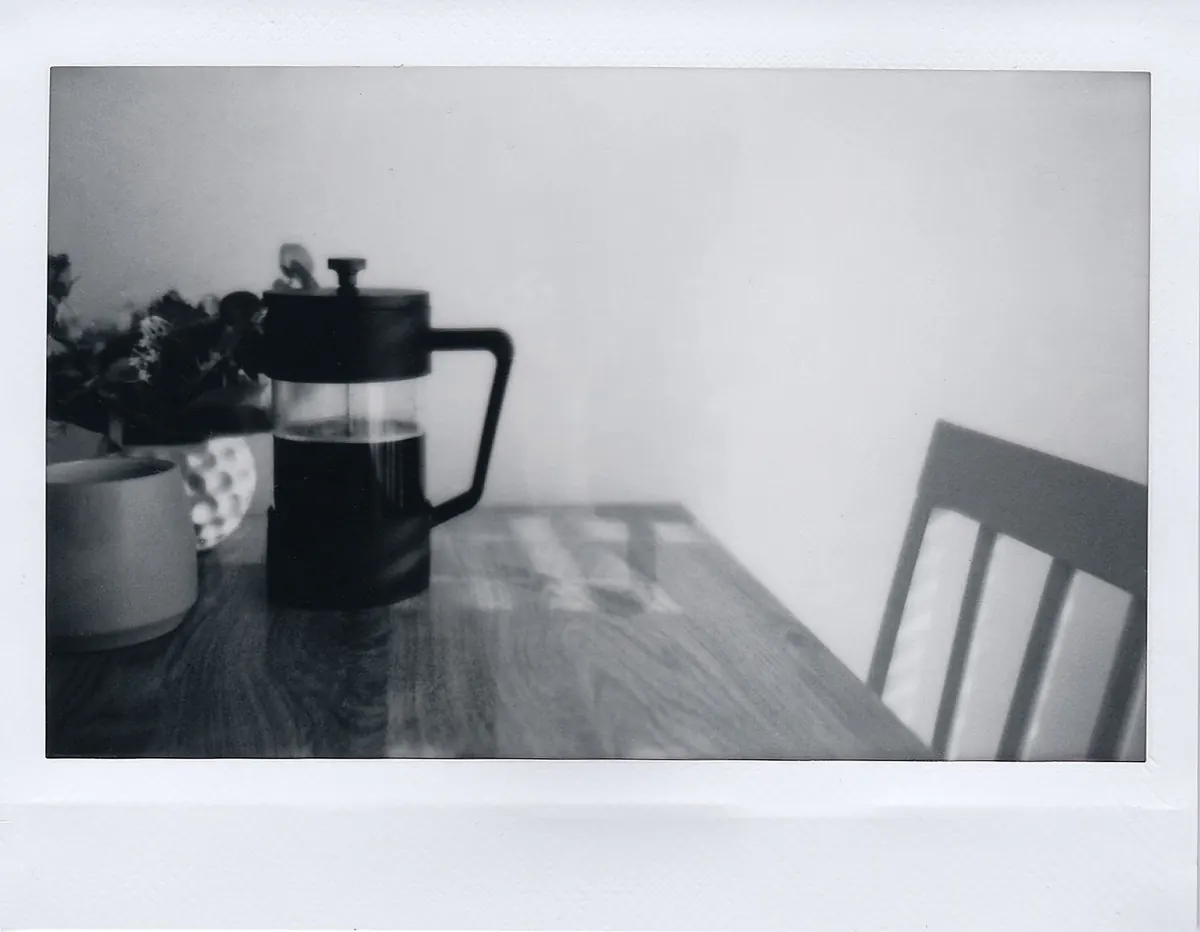
A French press is the most forgiving brewer in the kitchen. It doesn't care about pour patterns, bloom timing or a perfectly level bed of grounds. It just needs coffee sitting in hot water for a few minutes while you do something else. That forgiveness is exactly why you can make a very good cup without ever putting the carafe on a scale.
Scales are useful, and they make repetition easier. But the number on the display is only a proxy for the thing you actually care about: how the coffee tastes. If you have a spoon, a mug and a carafe, you have enough to dial in a French press. You just have to taste as you go instead of trusting a number.
What You're Actually Measuring
Weight-based recipes work because grams of coffee and grams of water are absolute. Volume is a rougher estimate — a tablespoon of coarse grounds and a tablespoon of fine grounds don't weigh the same, and a dark roast is less dense than a light one. On paper, that sounds like a problem.
In a French press it mostly isn't. Immersion brewing is slow and even, and the extraction is tolerant of small errors. A spoonful more or less changes the cup, but it doesn't ruin it the way a badly choked espresso shot does. So the goal isn't precision. The goal is a repeatable starting point plus a reliable way to correct it.
That means fixing three things — dose, grind and time — and then adjusting one of them at a time based on what you taste. Everything below is built around that idea.
The Baseline Dose: One Spoon per 100 Millilitres
A level tablespoon of medium-ground coffee holds roughly 5 to 6 grams. Water is conveniently easy: 100 ml weighs about 100 grams. So one level tablespoon per 100 ml of water puts you somewhere near a 1:17 ratio — a clean, fairly light cup that lets you taste the coffee rather than the strength.
Most people land one spoon stronger than that. Use this as your starting grid:
- 350 ml (3-cup press): 4 level tablespoons
- 500 ml: 5 to 6 level tablespoons
- 800 ml (8-cup press): 9 level tablespoons
- 1 litre: 11 level tablespoons
Two details matter more than the numbers. First, level means level — a heaped tablespoon can hold nearly twice as much as a scraped one, and that's the single biggest source of inconsistency when you measure this way. Second, use the same spoon every time. A actual tablespoon from the cutlery drawer is fine; a soup spoon is not. Pick one, keep it near the coffee, and stop thinking about it.
Measuring Water Without a Jug
Most French presses have volume markings etched on the glass, and they work fine — with one caveat. The markings tell you how much is in the carafe, not how much water you started with. Once the grounds go in, the level rises and you're reading the wrong thing.
So measure the water first. Fill the carafe to the mark you need, note the level, then add the coffee. If your press has no markings at all, use your favourite mug: fill it once, pour it into the carafe, and remember that one mug equals however much it holds. From then on, the mug is your unit. Two mugs, three mugs, done.
Leave a couple of centimetres of headroom below the rim. Grounds and the plunger take up space, and a press filled to the very top will spill when you press it.
Grind and freshness: the variables volume can't see
Here's where measuring by spoon gets slippery. Two coffees can measure the same and behave differently, because density shifts with roast level and with how the grinder set the particle size. A dark, oily roast scoops lighter than a dense light roast. A coarse grind settles looser than a fine one.
This isn't a reason to buy a scale. It's a reason to expect a small correction when you open a new bag. Keep the grind coarse and consistent — think raw sugar or flaky sea salt — and re-taste the first cup from any new coffee rather than assuming last week's spoon count still applies.
The Brew, Step by Step
Dose gets all the attention, but a French press can be undone by hot water poured too fast and a plunge that stirs up the fines.
- Preheat the carafe with hot tap water while the kettle boils, then tip it out.
- Let the kettle rest. Off the boil, wait 30 to 45 seconds. You want water hot enough to extract properly but not so hot it scalds the brew.
- Add the grounds and pour about half the water. Stir gently with a spoon to saturate everything, then pour the rest.
- Wait four minutes. At around three and a half, break the crust on top with your spoon and skim off the foam and floating bits. This is the step most people skip, and it's the one that makes the cup noticeably cleaner.
- Plunge slowly with steady pressure, stopping as soon as you meet resistance from the bed of grounds. Then pour immediately — coffee left sitting on the grounds keeps extracting.
Reading the Cup and Adjusting
Once the coffee is in your mouth, the diagnosis is usually obvious. The trick is changing only one thing, and changing it by one spoonful or thirty seconds rather than rebuilding the whole recipe.
- Thin and watery, with a sour edge: add one tablespoon of coffee. If it's still thin, grind a touch finer or steep 30 seconds longer.
- Bitter, drying, or muddy: drop a spoonful of coffee, or coarsen the grind, or shorten the steep. Too fine a grind is the usual culprit.
- Weak but harsh at the same time: almost always too little coffee ground too fine. Increase the dose, coarsen slightly.
- Good body but flat and muted: the water was probably too cool. Move the kettle to the carafe sooner.
- Gritty texture: not a strength problem. Coarsen the grind and skim the crust properly before plunging.
If you can describe what's wrong with the cup, you already know which direction to turn the dial.
One more habit worth building: taste the coffee black before you add milk. Milk hides exactly the signals — sourness, astringency, a thin mid-palate — that tell you what to change next time.
Make It Repeatable, Then Make It Yours
Write the recipe on the bag. Not grams and millilitres, just what you actually did: four spoons, four hundred millilitres, four minutes, coarse. Next time you buy the same coffee, start there. If the shop changes beans, start at the baseline again and adjust once.
Keep your measuring spoon with the coffee, not in the drawer. Keep the mug you use as your water measure in the same cupboard. Consistency in the small physical things is what replaces the scale — and after a few brews you'll find you're hitting the same cup without thinking about the numbers at all. That's dialled in, and you never had to weigh a thing.
Photo: Lisa Fotios / Pexels