Few things are as quietly disappointing as a bag of coffee that smelled extraordinary the day you opened it and tastes like wet cardboard two weeks later. Most people blame the grinder, the water, or their pouring technique. Often the culprit is simpler: the beans have been sitting in a warm cupboard in a clear jar with a lid that never quite sealed, slowly losing everything that made them interesting. The good news is that keeping coffee fresh is mostly a matter of a few habits, and none of them are expensive.
What "Fresh" Really Means for Coffee
Roasted coffee is porous. During roasting, beans expand and lose moisture, and afterwards they continue to release carbon dioxide for days. That is why a bag of coffee roasted yesterday can look puffed up like a pillow, and why a one-way valve on the bag exists: it lets gas escape without letting air in.
While the beans degas, other processes work against you. Oxygen reacts with the aromatic oils on the surface of the bean, and those oils are where most of the flavour lives. Light accelerates the same reaction. Heat speeds everything up. Moisture gets in and makes the coffee taste dull and papery.
Freshness is a slope rather than a cliff edge. Extremely fresh beans can taste sharp or slightly gassy; many coffees are at their best somewhere between a few days and a few weeks after roasting. Darker roasts generally fade faster than lighter ones because their oils sit closer to the surface. Ground coffee is a different situation entirely: once you grind, the surface area multiplies and the useful window shrinks from weeks to hours.
This is why the roast date printed on the bag matters more than the "best before" date. The second one is about compliance; the first one is about flavour. If a bag only shows a best-before date, buy from somewhere that puts the roast date on the label.
The Four Things That Ruin Stored Coffee
Almost every storage mistake comes down to one of these:
- Oxygen. The main driver of staling. Every time you open a bag and leave it open, you swap the protective gas inside for room air.
- Light. Sunlight and bright kitchen lighting degrade the oils. A beautiful glass jar on a sunny counter is one of the fastest ways to flatten a good coffee.
- Heat. A cupboard above the oven, or a shelf next to the kettle, is warmer than you think. Warm beans release aroma into the air instead of into your cup.
- Moisture. Steam, damp spoons, and condensation all do damage. Never scoop with a wet spoon, and never store beans next to the sink.
There is a fifth, less obvious enemy: smell. Coffee absorbs odours readily, so a jar that previously held spices, or a shelf next to garlic and onions, will leave its mark on the cup. Keep beans away from anything strongly scented.
Choosing a Container That Actually Works
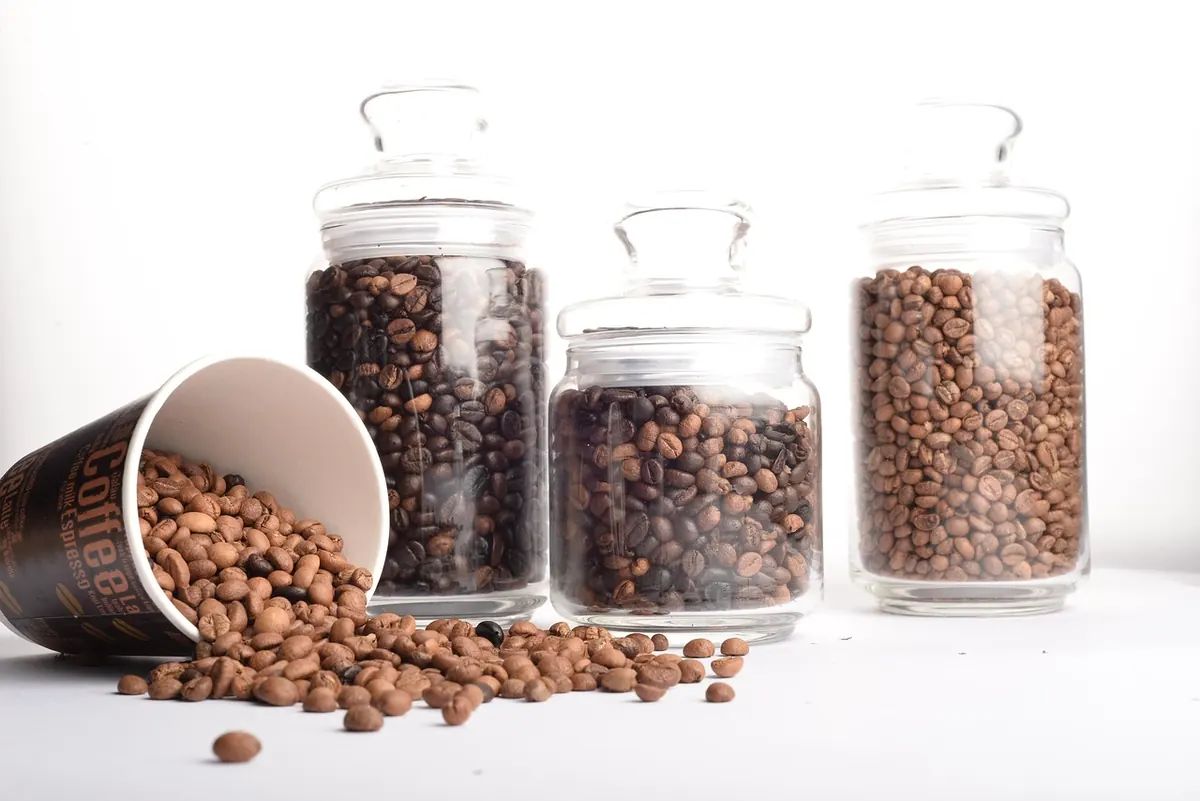
You do not need a laboratory. You need something opaque, airtight, and roughly the size of the amount of coffee you keep on hand. Four things to look for:
- Opaque or stored in the dark. A dark cupboard solves this for free, so a clear jar is not automatically disqualifying — just do not leave it on the windowsill.
- A genuine seal. Clamp lids with rubber gaskets and screw-top jars with a silicone ring work well. Decorative tins with loose lids do not.
- The right volume. A large container that is two-thirds empty is mostly air. Match the jar to the bag, or use two smaller jars.
- A one-way valve, if you can get one. Some coffee-specific canisters have one. The valve on the original bag does the same job.
Can you just keep the original bag?
Often, yes. A good roaster's bag with a valve and a proper zip closure is designed for exactly this. Squeeze the air out gently before sealing, press the zip firmly, and keep the bag in a cupboard. The weak point is the zip: once it starts collecting crumbs and failing to close, transfer the beans to a jar. Do not leave the bag rolled open on the counter with a clip on it for a week — that is the single most common storage mistake.
What to skip
Skip open bowls, paper bags left standing, glass hoppers on top of a grinder that sit in the light all day, and huge containers filled once a month. Also skip the idea that a fridge door shelf is a sensible home for coffee. Which brings us to the next point.
Does Coffee Belong in the Fridge?
Generally, no. A fridge is a humid, odour-filled place with constant temperature swings every time the door opens. Beans pulled out of a cold fridge meet warm air and collect condensation on their surface — moisture, right where you least want it. Coffee also takes on the smell of last night's leftovers with impressive speed.
The freezer is a different conversation, and it is genuinely useful if you buy more coffee than you drink in a few weeks. The rules matter, though.
How to Freeze Beans Without Ruining Them
Freezing does not damage coffee. Poorly sealed freezing does, because moisture and freezer burn get in. Do it in portions and it works well.
- Start with fresh, whole beans. Freezing pauses staling; it does not reverse it. Beans that were already three months old will still taste like three-month-old coffee when thawed.
- Divide into small portions. Aim for roughly a week of coffee per portion, so you open one bag at a time.
- Seal each portion properly. A zip-top bag with the air pressed out, or a small airtight jar, works. Label it with the roast date and the date you froze it.
- Freeze fast and keep it cold. Put the portions at the back of the freezer, not in the door, where the temperature fluctuates.
- Take out only what you need. Open one portion, use it, and leave the rest sealed.
- Do not refreeze. Repeated thawing and freezing cycles are what cause the mushy, flat results people complain about.
One practical shortcut: you can grind beans straight from the freezer without waiting for them to thaw. Cold beans grind slightly differently, but it is perfectly workable and avoids the condensation problem entirely. If you prefer to let them come to room temperature, keep the container sealed while it happens so moisture settles on the outside of the jar rather than on the beans.
Buying Habits Matter More Than Gear
The best container in the world cannot rescue coffee you bought six months ago. Buy smaller amounts more often. A 250-gram bag every couple of weeks beats a kilo bag that lasts a season, even if the larger bag costs less per gram — you will drink the difference in quality either way.
Buy whole bean if you own a grinder. If you do not, ask the shop to grind in small batches rather than all at once, and keep the ground coffee in the smallest airtight container you have. Ground coffee has a short life; treat it accordingly and finish it within a week or two.
Finally, store coffee where you actually use it: a cool, dark cupboard near the grinder, away from the oven and the kettle. Convenience matters. A perfect storage system in a cupboard you rarely open tends to get abandoned.
A Simple Routine That Works
Keep one bag open and the rest sealed. Use an opaque, airtight jar that holds roughly what you drink in a week, or the roaster's own valve bag while its zip still works. Keep it in a cupboard, away from heat and light. Scoop with a dry spoon. Write the roast date on anything you freeze, portion it small, and never refreeze. That is the whole system — and it will do more for your morning cup than most upgrades you could buy.
Photo: Pexels / Pixabay